
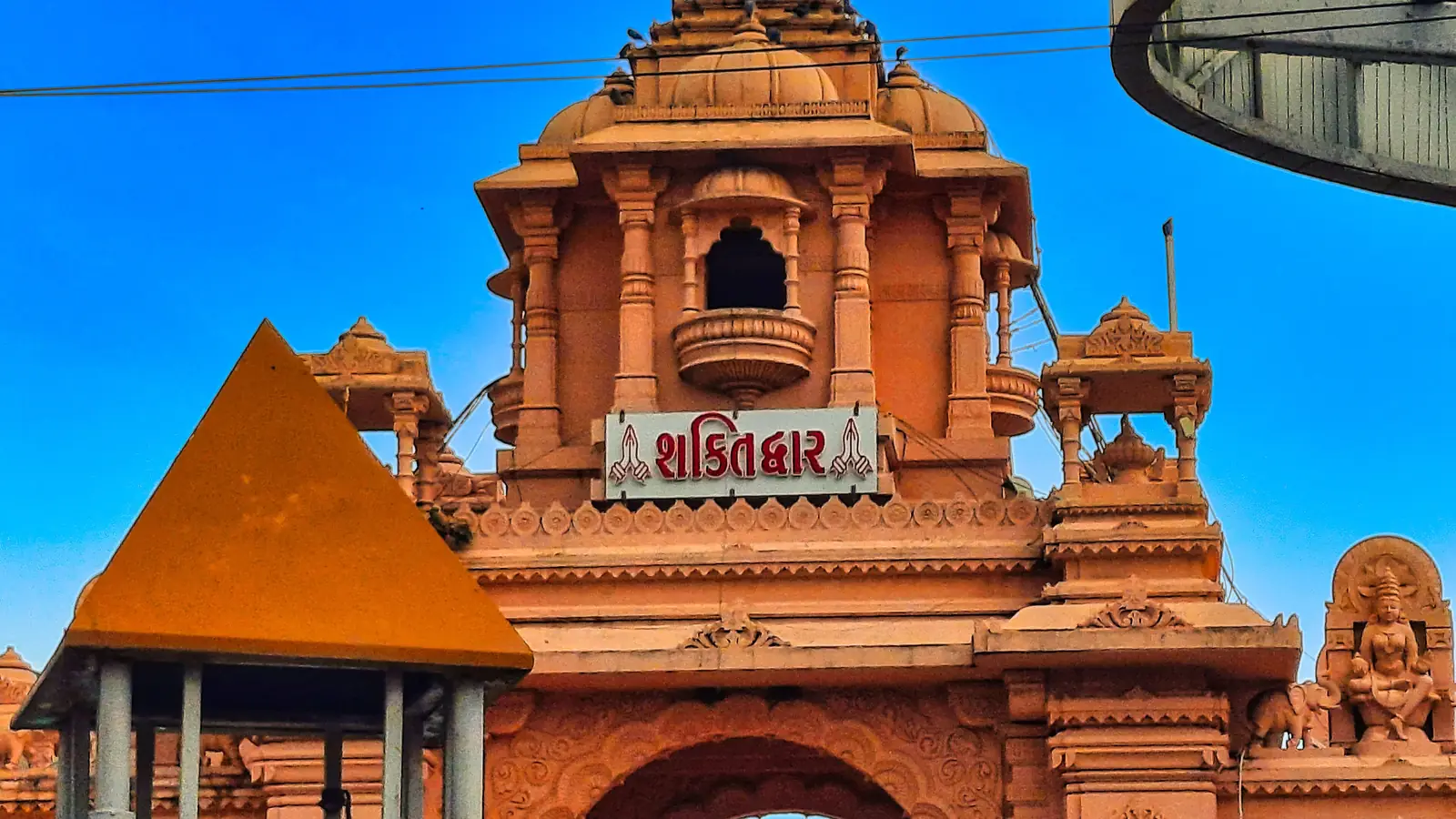
Why pilgrims come here
At Ambaji, the goddess is worshipped through the sacred Vishwa Yantra rather than an idol. Gabbar hill nearby is believed to be the original seat of the goddess and is reached by steps or a ropeway.
The Bhadarvi Poonam fair, in the monsoon month of Bhadrapad, brings lakhs of pilgrims, many walking for days from across Gujarat.
Darshan & aarti tips
- The temple is open through the day with set aarti times; check current timings.
- Gabbar hill has a ropeway; queues are long during festivals.
- During Bhadarvi Poonam, roads are full of padyatris and traffic is controlled. Allow extra time.
- Navratri is another very busy period.
Timings change. Temple timings vary with seasons and festivals. Always confirm the day's darshan and aarti schedule with the temple's official sources before you travel. We'll plan your departure around it.
Also visit
- Gabbar HillThe goddess's original seat, with a ropeway.
- Kumbhariya Jain TemplesCarved marble temples about 2 km away.
- Koteshwar MahadevA temple at the source of the Saraswati, a few km away.
- Mount AbuHill station about 45 km away, with the Dilwara temples.
Suggested yatra plan from Rajkot
- Day 1Drive from Rajkot (7–8 hours), evening darshan and aarti.
- Day 2Morning darshan, Gabbar hill by ropeway, Kumbhariya temples, then Mount Abu or the drive home.
For the drive, stops and vehicle options, see the Rajkot to Ambaji taxi guide.
Travelling with elders
Most of our pilgrimage journeys include parents or grandparents, so we plan for their comfort first.
- Rest and meal stops planned for elders
- Drop points close to temple entrances where allowed
- Plans built around darshan and aarti timings
- Patient drivers who help with luggage