
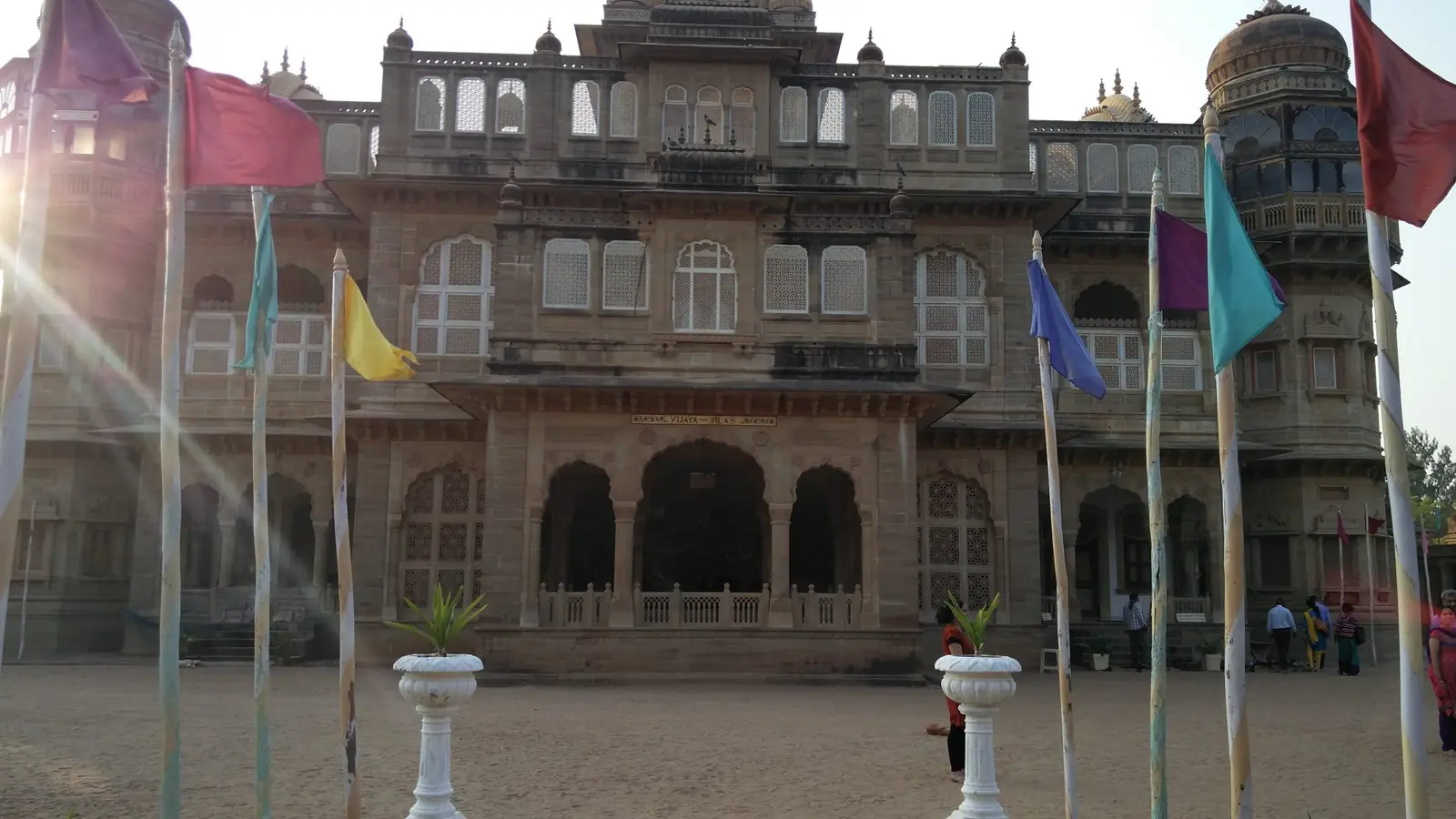
About Bhuj
Bhuj's old city holds the palaces of the Kutch rulers, while the surrounding villages are known for embroidery, weaving, block printing, bell metal work and pottery. The Smritivan memorial on Bhujiyo hill honours those lost in the 2001 earthquake.
Most visitors spend two or three days using Bhuj as a base for the White Rann at Dhordo, Kala Dungar, Mandvi and the craft villages. See our Kutch guide for the wider region.
Places to see
- Aina MahalAn 18th-century palace known for its hall of mirrors.
- Prag MahalA Gothic-style palace with a clock tower.
- Smritivan Earthquake MemorialA memorial park and museum on Bhujiyo hill.
- Kutch MuseumGujarat's oldest museum, with Kutch history and crafts.
- Swaminarayan TempleA large, ornate temple in the city.
- Bhujodi and the craft villagesWeaving, embroidery and printing workshops just outside Bhuj.
Best time to visit
October to March, especially during the Rann Utsav season. Summers are very hot.
Getting there from Rajkot
About 230–245 km from Rajkot, roughly 4.5–5 hours via Morbi and Samakhiali. Bhuj has an airport and a railway station.
See the full route guide: Rajkot to Bhuj taxi.
Suggested plan
- Day 1Drive from Rajkot, Aina Mahal and Prag Mahal in the afternoon.
- Day 2Bhujodi and the craft villages, then the White Rann at Dhordo for sunset.
- Day 3Kala Dungar or Mandvi, then drive back to Rajkot.
Travel tips
- Visiting the White Rann needs a permit, available online or at the checkpost; carry ID.
- Book accommodation early during Rann Utsav.
- Buy crafts directly from artisans in the villages where possible.